
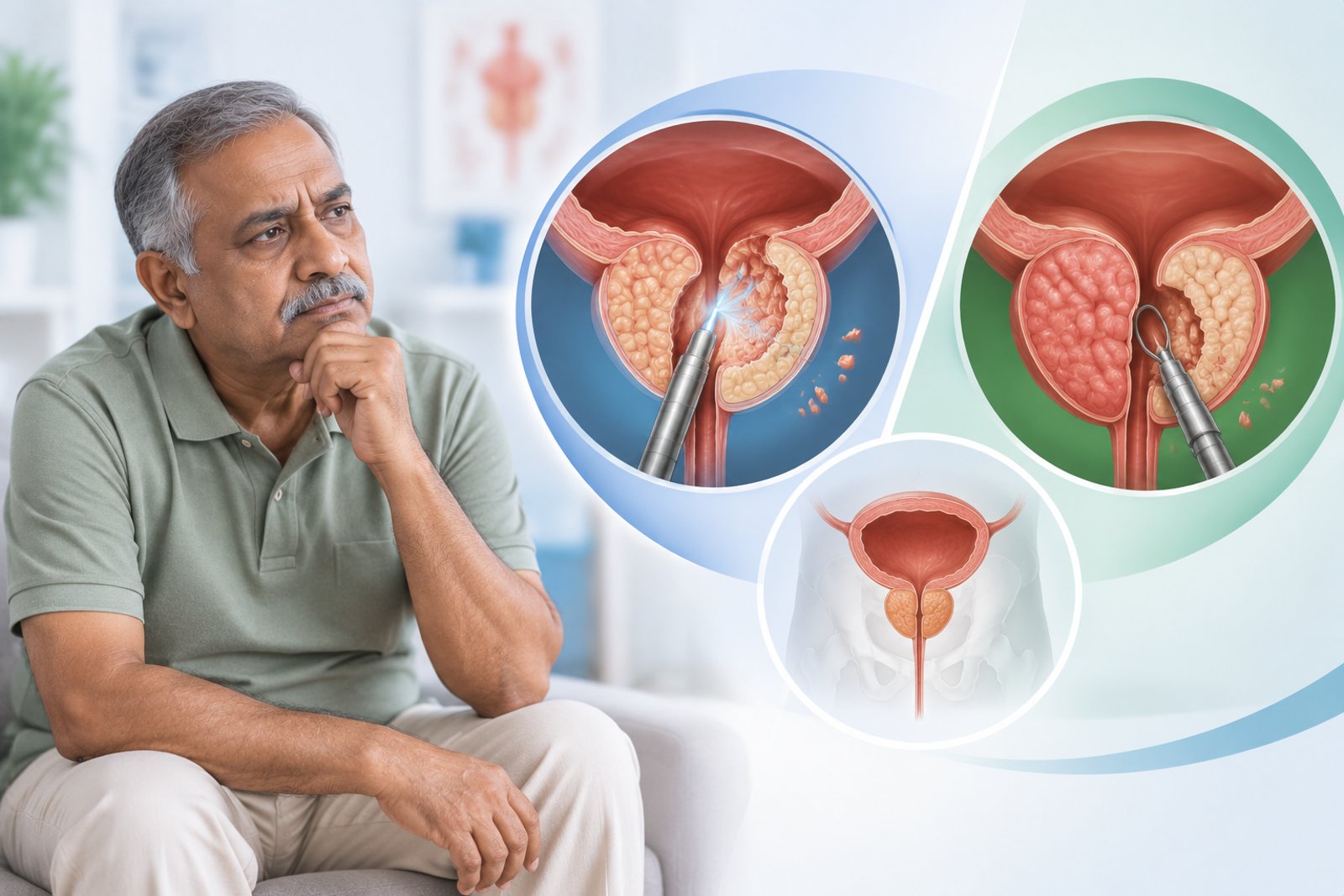
Understanding Enlarged Prostate (BPH) and Why Treatment Matters
Many men develop an enlarged prostate as they age. This condition is called benign prostatic hyperplasia (BPH). The prostate is a small gland that helps make semen. When it grows larger, it can press on the bladder and urethra. As a result, men may have trouble urinating, feel a frequent urge to go, or notice a weak stream. Sometimes, BPH can cause infections or even kidney problems. Therefore, treatment is important to improve quality of life and prevent complications. There are several enlarged prostate treatment options, including medications and surgery. Two advanced prostate surgery methods are HoLEP and TURP. In this blog, we compare HoLEP vs TURP to help you understand your choices.
What Is HoLEP?
HoLEP stands for Holmium Laser Enucleation of the Prostate. It is a minimally invasive prostate procedure. During HoLEP, doctors use a laser to remove extra prostate tissue. This helps open the urinary passage. The procedure is done under anesthesia. Usually, patients stay in the hospital for one or two days. HoLEP is suitable for men with large prostates or those who did not improve with medicine.
What Is TURP?
TURP stands for Transurethral Resection of the Prostate. It is a common surgery for BPH. In TURP, doctors insert a thin tool through the penis. They remove small pieces of prostate tissue using an electric loop. This clears the blockage and improves urine flow. TURP is usually done under anesthesia. Most patients stay in the hospital for one or two days. TURP has been used for many years and is well-studied.
HoLEP vs TURP: A Direct Comparison
When choosing between HoLEP vs TURP, it helps to compare key points. Both are advanced prostate surgery options. However, they have some differences.
According to the American Urological Association, both are safe and effective. Yet, your doctor will help decide which is best for you.
How to Choose the Right Treatment
Choosing between HoLEP and TURP depends on several factors. First, your prostate size matters. HoLEP is often better for larger glands. Second, your overall health and any medicines you take are important. For example, men on blood thinners may do better with HoLEP. Third, your doctor’s experience with each procedure can affect results. Finally, your personal preferences and recovery goals play a role.
Above all, make a decision that feels right for you after talking with your doctor.
Prevention and Lifestyle Tips for Prostate Health
While not all cases of BPH can be prevented, healthy habits may help. For instance, staying active and eating a balanced diet support prostate health. In addition, drinking enough water and limiting caffeine or alcohol can reduce symptoms. Try to avoid holding urine for long periods. Also, regular check-ups with your doctor can catch problems early.
These steps may not prevent BPH, but they can help you feel your best.
Conclusion
In summary, both HoLEP and TURP are advanced treatments for an enlarged prostate. Each has unique benefits and risks. Because every man is different, it is important to talk with a urology specialist. They can guide you to the best enlarged prostate treatment options for your needs. Consult a urology specialist at Sepuri Kidney Centre for personalized advice on enlarged prostate treatments.